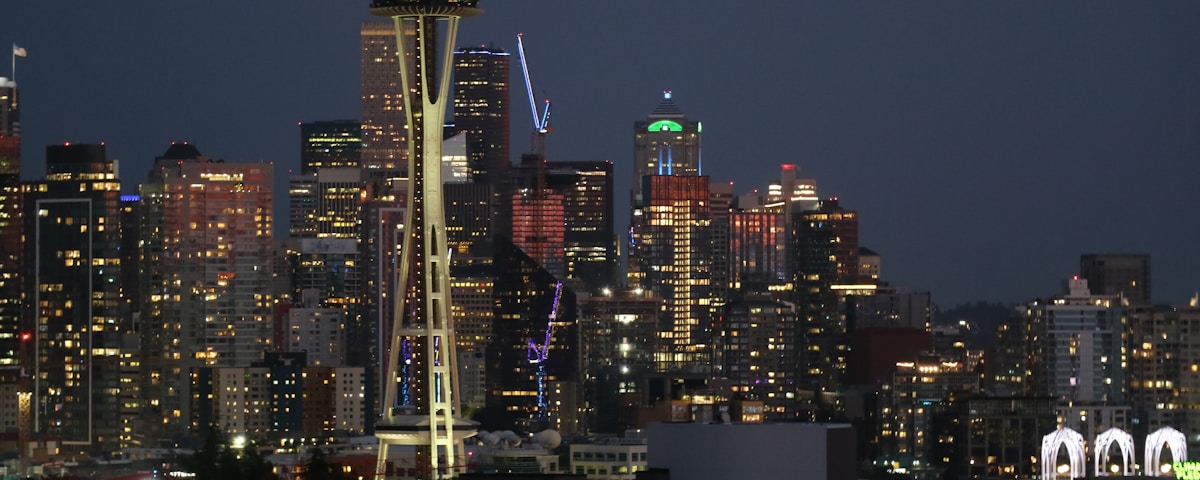
Seattle is consistently cited as one of the US cities with the highest density of non-monogamous people per capita, alongside San Francisco, Denver, and Portland. The reasons are legible from the broader culture: a large tech and creative class, a strong progressive political tradition, significant queer community, and a Pacific Northwest culture that tends toward experimentation and intentional lifestyle choices.
The scene is well-organised, multiple poly groups, active munches, a substantial kink community, and strong cross-community connections. It's also physically close enough to Portland (three hours by train or two hours by car) that the two communities overlap meaningfully, and people often participate in events in both cities.
The polyamory community
Seattle Polyamory is the main organised group, running regular meetups and social events across the city. It's large by poly group standards and has been consistently active for years. The Polyamory Society of the Greater Seattle Area also organises events and provides community infrastructure.
The community skews tech-adjacent, progressive, and queer-friendly, there's significant overlap between the poly and queer communities in Seattle, and many CNM spaces are explicitly LGBTQ+-inclusive. Relationship anarchy has strong representation here, reflecting the broader Pacific Northwest tendency toward less hierarchical structures.
The community is geographically spread across a sprawling city, Capitol Hill (the queer and progressive centre), Fremont, and the University District are the main anchors, but the scene is active across multiple neighbourhoods. Having a car or comfort with Seattle's bus system makes navigating events significantly easier.
The queer scene
Capitol Hill is Seattle's traditional queer neighbourhood and remains the centre of the city's LGBTQ+ community. The bar and club scene on and around Pike/Pine has contracted in recent years as has happened in many US cities, but it remains active and politically central.
The leather and kink communities are strong on Capitol Hill. The Cuff Complex is the main leather and kink bar, a long-running institution that serves as community anchor for gay and bi men into leather, kink, and the broader alternative scene. Seattle also has a significant queer fetish community with regular private and semi-private events.
Seattle Pride in June is a major event and draws a large crowd. The Folsom Street Fair equivalent doesn't have Seattle's own edition, but the Portland Leather Pride (a few hours south) draws Seattle community members regularly.
The kink community
Seattle has one of the more developed kink communities in the US, organised primarily through the Northwest Leather Celebration and through local TNG (The Next Generation) and other munches. The Wet Spot (now the Center for Sex Positive Culture) was a pioneering institution, one of the first sex-positive community spaces in the US, and shaped Seattle's kink culture significantly. The CSPC continues to operate as a community resource.
The Seattle kink community is notably consent-forward and politically engaged, it's a community where the ethical frameworks are taken seriously and discussed explicitly. This connects to the broader Pacific Northwest cultural emphasis on intentionality.
What apps work here
Feeld, genuinely active in Seattle. One of the US markets where Feeld has real density. For urban CNM dating, it's the primary specialist platform.
OkCupid, still active and useful in Seattle, particularly for people who want detailed compatibility matching. Good for the poly community specifically.
Hinge, large user base in Seattle, useful as a mainstream supplement in a market with good Feeld coverage.
Grindr, dominant for gay and bi men. Capitol Hill has an active grid.
Scruff, stronger here than in many cities, reflecting the leather and kink community's engagement with the platform. Run alongside Grindr.
The Portland connection
Seattle and Portland have overlapping CNM communities, people participate in events in both cities, and many community members know counterparts across the Cascades. Portland is considered by many to have an even higher density of non-monogamous people per capita than Seattle, and the two cities' scenes reinforce each other.
If you're based in Seattle, the Portland scene is worth knowing, events in Portland draw Seattle participants, and the reverse is true. For anyone considering relocation within the Pacific Northwest, Seattle and Portland offer the most developed CNM infrastructure in the region.
Practical notes
Geography: Seattle's hills and water geography make it more navigable in some directions than others. Capitol Hill is walkable from downtown; other neighbourhoods require transit or a car. The bus system is functional but not fast. Having a car matters more here than in denser East Coast cities.
Cost: Seattle's cost of living has risen significantly with the tech industry's growth. It's now comparable to other major tech hubs (San Francisco, Boston, New York) and this affects the demographics of the CNM community, the tech-adjacent cohort dominates partly because they can afford to live near the city centre where community events happen.
Rain: The Pacific Northwest's reputation for grey, rainy weather is accurate for much of the year. The community is built around indoor spaces and the scene doesn't really have a high season in the way that sunnier cities do.
Related: San Francisco city guide · Los Angeles city guide · Best CNM dating apps in the US