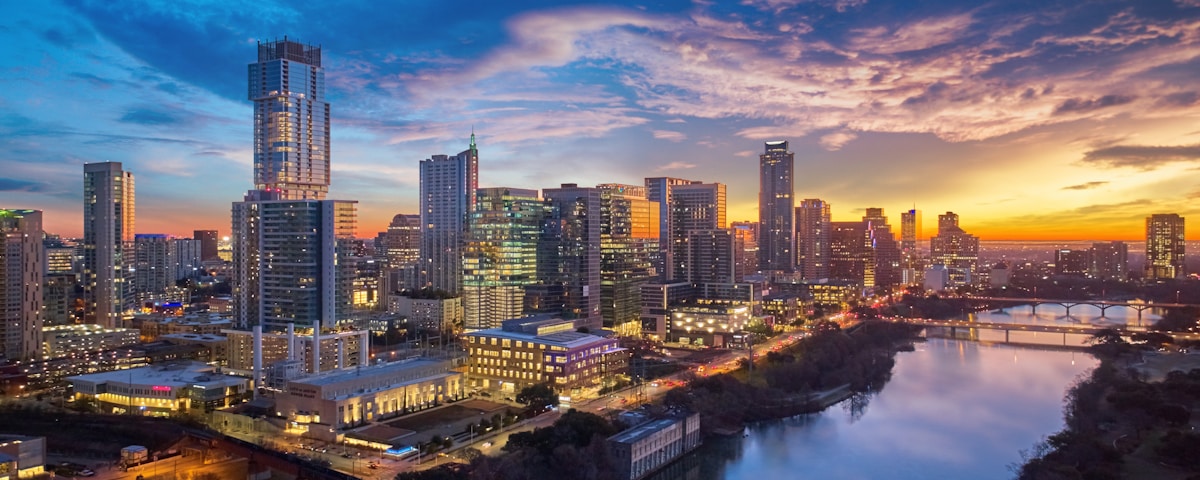
Austin is an anomaly: a liberal city inside a conservative state, with politics, culture, and demographics that have more in common with Seattle or Denver than with the rest of Texas. The city's rapid growth over the past decade, driven by tech industry migration from California, a large university population from UT Austin, and a longstanding countercultural scene, has produced a CNM community that's larger and more organised than the Texas context would suggest.
The community is notably young. The influx of tech workers, the student population, and Austin's reputation as a destination for young professionals moving away from more expensive coastal cities has produced a CNM scene that skews 25–40 and is generally comfortable with the language and frameworks of modern non-monogamy.
The polyamory community
Austin Polyamory is the main organised group, with regular meetups, socials, and discussion events that have grown significantly with the city's population boom. The community is large enough to have differentiated into specific-interest subgroups, queer-focused, relationship anarchy-oriented, and age-specific events exist alongside the general meetups.
East Austin (the East Sixth corridor and surrounding neighbourhoods) has become the cultural centre for the progressive and countercultural community, displacing some of the older scene in Hyde Park and South Congress. Community events tend to happen in east Austin venues and in people's homes.
Austin's tech community has significant overlap with the CNM community, a pattern that repeats in San Francisco, Seattle, and Denver. The tech culture's emphasis on rational decision-making and explicit communication translates reasonably well into how people approach non-monogamy here.
The queer scene
Austin has a genuine queer scene, concentrated in the Cedar Park neighbourhood and along East Sixth. Oilcan Harry's is the long-running gay bar and community anchor. The scene is smaller than in larger cities but well-connected, Austin has good cross-community ties with Houston and Dallas, both of which have larger gay communities.
Austin Pride (August) is a significant event, deliberately scheduled during summer. The queer community here is notably progressive and trans-inclusive, shaped by UT Austin's student community and the presence of organisations like Out Youth.
The kink community
Austin has an organised kink community with regular munches and events, primarily through Fetlife. The community is accessible but smaller than Seattle's or Portland's. Several local groups run educational and social events; the Texas Leather Pride events draw Austin participants regularly. The climate makes outdoor kink events viable in spring and fall in ways that Pacific Northwest cities can't match.
What apps work here
Feeld, genuinely active in Austin, reflecting the tech community's familiarity with the platform and the high CNM density. One of the better inland US markets for Feeld.
OkCupid, active and useful, particularly for the poly-oriented community.
Hinge, very active in Austin. The tech-young-professional demographic that drives Hinge's user base in most cities is particularly pronounced here.
Grindr, active for gay and bi men. East Sixth and the Cedar Park area have active grids.
Practical notes
Heat: Austin summers are extreme, regularly over 100°F from June through September. Outdoor social life contracts significantly in summer; the community is more active in spring and fall. This is the inverse of Seattle or Portland, where winter is the indoor season.
State politics: Texas's political environment, abortion restrictions, anti-LGBTQ+ legislation, conservative state government, affects the CNM community in practical ways. Healthcare access, legal protections, and general political anxiety are real factors for many community members. The city is a blue island, but it operates within a state that actively legislates against many of its residents' values. Some community members have left; others stay because Austin specifically has the community infrastructure they need.
Cost: Austin's cost of living has risen sharply with the tech migration. It's no longer the cheap alternative to the coasts it once was, rents are comparable to many mid-tier coastal cities.
Car dependency: Austin is a car city. Getting between neighbourhoods and to events requires driving; the public transit system is limited. This is more significant than in denser cities for community participation.
Related: Denver city guide · Seattle city guide · Best CNM dating apps in the US