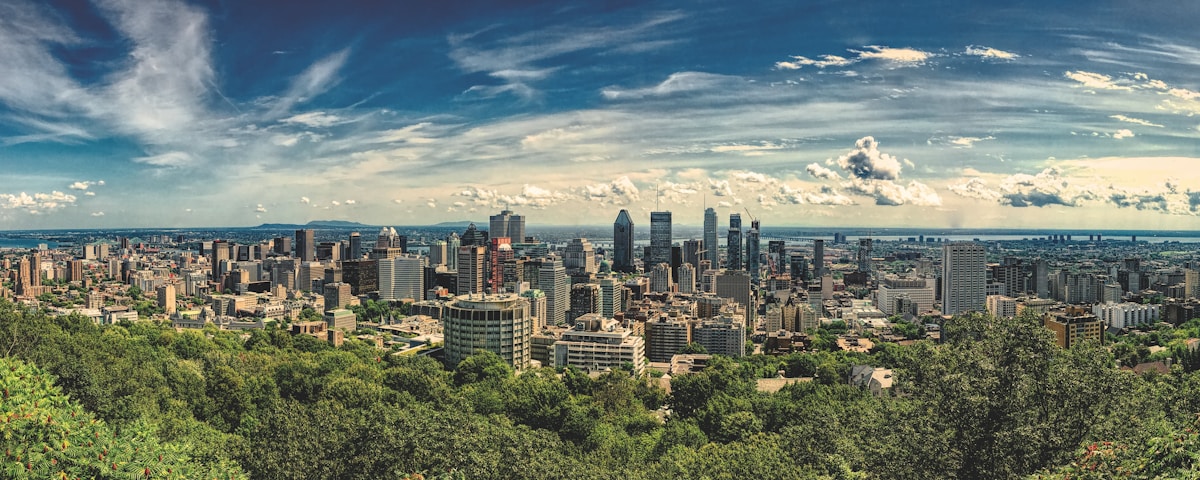
Montreal occupies a distinctive place in North American CNM culture. Quebec's secular, progressive political tradition, shaped by the Quiet Revolution and a long history of pushing back against conservative Catholic social norms, produces a baseline cultural openness to non-conventional lifestyles that's different from English Canada and most of the US. The city's French character, its reputation for nightlife and sexuality, and its large university population all contribute to a CNM scene that's larger and more active than the city's size alone would predict.
Montreal is also genuinely bilingual in its CNM community. Most organised events happen in French, but English-language participation is common, and many community members move comfortably between both languages. English-only speakers can navigate the scene, though fluency in French significantly widens access.
The polyamory community
Polyamorie Québec is the main organised group, running regular meetups, discussion events, and social gatherings, primarily in French, with significant English participation. The Montreal poly community is large by Canadian standards and has been consistently active for years.
The community has significant overlap with the academic and activist communities. McGill, Concordia, UQAM, and the Université de Montréal all have large student and faculty populations, and the academic and left-progressive influence on the community is visible in how it discusses ethics, hierarchy, and relationship structure. Relationship anarchy has strong representation.
The Plateau-Mont-Royal and Mile End neighbourhoods, the traditional cultural centre of progressive Montreal, are the main anchors for community events and social life. Rosemont and Villeray are also relevant. Getting to events from other parts of the island is generally straightforward by metro.
The queer scene
Montreal's Gay Village (Le Village) is one of the most developed queer neighbourhoods in North America, a concentrated stretch of Rue Sainte-Catherine Est with bars, clubs, and community spaces that remain genuinely active year-round (unlike some North American gay neighbourhoods that have hollowed out in recent years).
Non-monogamy is normalised within the Village and in the broader Montreal queer community to a significant degree. The leather and kink community is real and organised, the Cuir Montréal (Montreal Leather) community has events throughout the year, and Montreal hosts leather-related events that draw visitors from across North America.
Montreal Pride (Fierté Montréal, late July/early August) is one of the largest Pride events in North America. Black & Blue, historically the largest gay circuit party in North America and running in October, draws an international crowd and anchors the fall leather and fetish calendar.
The kink community
Montreal has a well-organised BDSM and kink community with a range of events and venues. Taboo is the city's main fetish event brand; various dungeon and play space events happen regularly through private and semi-private channels. The kink and CNM communities overlap substantially, and getting into one provides access to the other through shared social networks.
The French character of much of the kink community means some events are conducted primarily in French. English participation is generally welcome but may require more navigation than in English-Canadian cities.
What apps work here
Feeld, genuinely active in Montreal, with a meaningful user base particularly among the English-speaking and bilingual community. One of the more functional Feeld markets in Canada.
OkCupid, functional in Montreal, with active users in both English and French. Good for the poly-oriented community and for detailed compatibility matching.
Grindr, dominant for gay and bi men. The Village produces an active grid.
HER, functional for queer women and non-binary people, reflecting the strong Montreal queer community. Better here than in most Canadian cities outside Toronto and Vancouver.
French-language platforms, some Quebec-specific dating apps exist but none are CNM-specific. The CNM community primarily uses international platforms.
Practical notes
Language: French is the primary language of most community events, particularly in the poly community. English is widely spoken and English-only participants are accommodated, but some community spaces, particularly French-language poly groups and French-character kink events, will be more accessible with at least functional French.
Seasons: Montreal's winters are extreme, genuinely cold in a way that affects social life from November through March. The community is active year-round but the summer months (June–August) are when outdoor social life expands significantly. The Jazz Festival (late June/early July) and Just For Laughs (July) bring additional energy; Pride and Black & Blue anchor the summer-fall social calendar for the queer and kink communities.
Cost: Montreal is one of the most affordable major cities in North America, significantly cheaper than Toronto, Vancouver, New York, or San Francisco. This affects the community demographics and makes the city accessible to a wider range of people, including younger and more financially precarious community members.
Toronto connection: Montreal and Toronto have some cross-community participation, they're a five-hour drive or one-hour flight apart, but the French character of Montreal's community means less overlap than might be expected between two Canadian cities of comparable size.
Related: Toronto city guide · New York city guide · Best CNM dating apps in the US