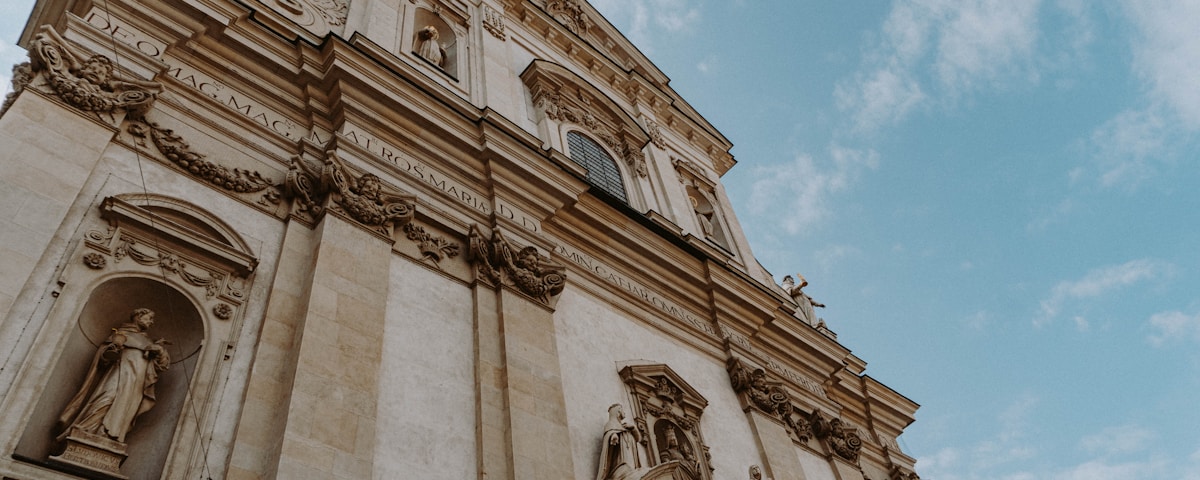
Vienna is a city of cultural contradictions. The former Habsburg capital carries a conservative Catholic heritage alongside a fin-de-siècle tradition of radical artistic and intellectual life, the city of Freud, Klimt, and the Vienna Secession. That intellectual tradition extends to how parts of the CNM community here think about relationships: philosophical, interested in frameworks, and more engaged with relationship anarchy and ethical theory than many comparable Central European cities.
The CNM community is smaller than Berlin's or Munich's but well-organised for a city of two million. It's also notably international, Vienna has a large diplomatic and NGO community, and the CNM scene has a higher proportion of multilingual, internationally mobile people than the city's Austrian population alone would produce.
The polyamory community
Polyamorie Wien is the main organised group, running regular meetups and discussion events primarily in German, with English participation accommodated. The community leans intellectual, expect discussions of ethical frameworks alongside social events, and a cultural comfort with theoretical engagement that may be more developed here than in more pragmatically oriented CNM communities elsewhere.
Relationship anarchy has meaningful representation in Vienna's community, connected to the broader Austrian and German RA scene. The overlap with feminist, queer, and activist communities is significant.
The Naschmarkt area and the 7th district (Neubau) are cultural anchors for progressive Vienna, good starting points for community events and independent social life.
The queer scene
Vienna's queer scene is centred around the Naschmarkt area, Mariahilfer Strasse, and Gugg (a long-running queer café and community space). The scene is smaller than Berlin's but genuine, a city of two million has enough population for a real queer community, and Vienna's has decades of infrastructure.
Vienna Pride (Regenbogenparade, June) is one of Central Europe's larger Pride events. The kink and leather community is present and organised, connecting to the European leather circuit, Vienna is roughly equidistant from Berlin, Munich, and Prague, all of which have leather events that Vienna's community participates in.
The kink community
Vienna's BDSM community is organised through Austrian kink networks and Fetlife. Events happen at private and semi-private venues; the community is accessible once you're in the network. The Vienna fetish scene has a long history, the city's cabaret and underground tradition shapes how alternative sexuality is organised here, less countercultural in the Berlin mould and more integrated into the city's aesthetic life.
What apps work here
Feeld, present in Vienna, with a genuine if small pool. Works better here than in purely German-speaking smaller cities, partly due to the international population.
OkCupid, functional in Vienna, particularly for English-speaking and bilingual users. Good for the intellectually oriented, compatibility-focused part of the community.
Grindr, the dominant platform for gay and bi men. Active Vienna grid.
Austrian mainstream apps, Austrian-specific platforms exist but have no CNM features. The CNM community uses international apps almost exclusively.
Practical notes
Language: German is the primary language of most CNM community events. English is widely spoken in Vienna, more so than in most Austrian cities, and the international community presence means English participation is routinely accommodated. Having some German significantly widens access, particularly to events organised by Austrian community members rather than the international contingent.
Central European connections: Vienna's geography makes it a natural hub for Central European CNM travel. Prague is three hours by train; Munich is four hours; Budapest is two and a half. The Austrian and Czech CNM communities have some cross-participation, and the European leather circuit connects Vienna to events across the continent.
Cost: Vienna is significantly cheaper than Munich, London, or Amsterdam, and remains one of Western Europe's more affordable capital cities. This makes community participation less economically restrictive than in higher-cost cities.
Culture: Vienna has a specific social culture, formal by Northern European standards, café-centred, and with a particular emphasis on intellectual conversation. CNM events here tend toward the discussion-oriented rather than the purely social. This is a feature for some people and an adjustment for others.
Related: Berlin city guide · Munich city guide · Amsterdam city guide