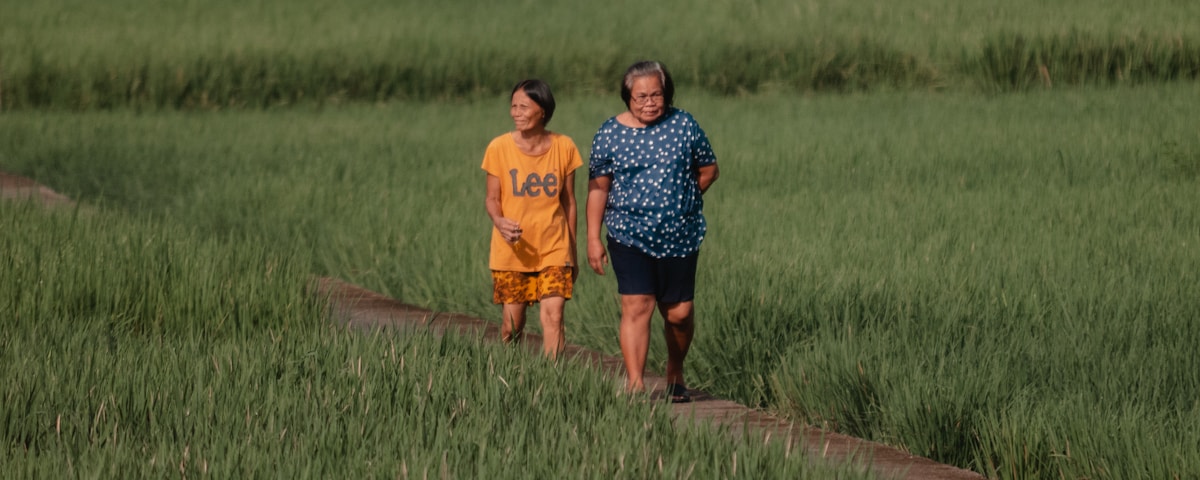
CNM culture is disproportionately urban. The communities, events, apps, and discourse around non-monogamy have developed in and for cities, places with enough population density to make multiple partners, community spaces, and social anonymity viable.
A significant number of people practise CNM in rural areas, small towns, and places where the population base is a fraction of what you'd find in London or New York. The challenges are real and specific, and they rarely get addressed in mainstream CNM content.
The partner availability problem
In a city, even a niche interest finds enough people. In a rural area or small town, the dating pool is radically smaller, and within it, the subset of people open to CNM may be a handful of individuals or fewer.
This affects CNM practice in concrete ways. You may date across greater distances. Your social and romantic networks may overlap heavily. The idea of compartmentalised relationships, where different partners have limited contact with each other, can be hard to maintain when everyone knows everyone.
Long-distance connections become more common and more significant for rural CNM practitioners. Many people maintain relationships that require travel to sustain, or primarily develop connections through online dating and then meet in person periodically. This changes the rhythm and structure of CNM considerably.
Privacy and small-town dynamics
Anonymity is an urban luxury. In a small community, your relationship structure may be known to people you'd rather not have that information. Your employer, your children's school community, your neighbours, your extended family, all may be in closer proximity to your social life than they would be in a city.
This doesn't mean CNM is impossible in rural areas, but it does mean discretion takes different forms. Some rural CNM practitioners choose a relatively open approach: their community knows, and they've accepted that. Others keep CNM relationships more private and are selective about who knows. Both approaches have trade-offs.
The cost of visibility in a rural context can be higher than in a city. Being known as non-monogamous in a close-knit community where non-monogamy is viewed negatively can affect professional relationships, family dynamics, and social standing in ways that are harder to compartmentalise.
Community: finding others
Urban CNM practitioners have access to regular meetups, kink/CNM-adjacent events, and informal community spaces. In rural areas, these may not exist at all.
Online community becomes more important in the absence of local in-person options. Subreddits, Discord servers, and Facebook groups for polyamory practitioners can provide connection, advice, and some sense of community when local equivalents don't exist.
Some rural practitioners travel to the nearest city periodically specifically to engage with CNM community events. This is more logistically demanding but keeps them connected to a broader community.
Others build their own. If there are even a handful of CNM-curious or CNM-practising people in a rural area, informal connections between them can create something resembling community, even at small scale.
Dating apps in low-density areas
Apps like Feeld, which require some population density to function well, may have very few users within a viable travel radius. General-purpose apps like OkCupid, Tinder, or Hinge tend to have more users in rural areas by sheer volume, but fewer people explicitly open to CNM.
Many rural CNM practitioners expand their search radius significantly. Travelling 60-90 minutes for a date becomes normalised. Video calls before in-person meetings take on more weight, because the investment of travel is higher and you want to know whether chemistry exists before committing to the journey.
Being explicit in app profiles about living in a rural area and what that means for logistics can filter for compatible matches, people willing to engage with the distance, or people who are also geographically isolated and understand the trade-offs.
Polycules and logistics in low-density contexts
In cities, a polycule might involve partners who live within cycling distance of each other, can share social spaces, and can accommodate spontaneous meet-ups. In rural areas, the geography of a polycule may span hundreds of miles.
This changes how relationships develop and are maintained. Sustained connection across distance requires intentional communication, scheduled calls, deliberate planning, recognition that absence doesn't mean reduced importance. Some people find they're better at this than they expected. Others find the logistical overhead unsustainable.
What rural CNM sometimes does better
A few things that rural practitioners sometimes report as advantages: the forced intentionality of longer-distance relationships tends to produce more explicit communication. When you can't rely on casual proximity to maintain a connection, you get deliberate about it.
The smaller pool, while limiting, also tends to mean more sustained connections with fewer disposable-feeling interactions. The throwaway dynamics of swipe-culture dating are harder to sustain when the pool is small and you're likely to encounter the same people repeatedly.
And the absence of a local CNM community, while isolating, sometimes means rural practitioners develop a clearer personal framework for their practice rather than absorbing community norms wholesale. There's something to be said for working things out for yourself rather than from received wisdom.
The honest summary
CNM in rural areas is harder in specific ways that most CNM content doesn't acknowledge. The partner pool is smaller. Privacy is more difficult. Community resources are thin or absent. Logistics require more effort and cost.
None of this makes it impossible. Many people practise CNM successfully in non-urban contexts. But doing so with clear eyes about the actual constraints, rather than trying to replicate a model designed for urban density, tends to produce more sustainable outcomes.